|
Marquetry is the art of creating decorative designs and pictures by
skillfully utilizing the grain, figure and colors of thin veneers, and
sometimes other materials such as shell or ivory.
While the exact origins
of marquetry are unknown, it is believed to have its inception in ancient
Egypt where inlays were used in the palace of King Mausolus around 353 BC,
located in modern day Turkey.
In addition to this, hieroglyphs and paintings from Ancient Egypt
indicate that veneers were cut with bronze adzes and applied to burial
caskets. |
|
|
During this same time period, mosaic work was also widespread.
Thus, it is presumed that it didn't take long for old world craftsmen to
also start experimenting with designs formed from different veneers. |
|
|
|
In the 14th Century marquetry was developed in Northern Italy and used
as a method of decorating cathedrals. Over the next few centuries,
marquetry schools were established in France, Germany and Holland.
During the 16th to 18th Centuries much exquisite work was produced
focused primarily on decorating furniture, especially for royalty. |
| |
|
Eventually, marquetry extended westward from Europe to America and
beyond. |
| |
|
Today there are a handful of professional marquetarians, however, it is
often the amateur who produces some of the finest work.
Unrestricted by commercial concerns, they are able to develop new
techniques which are often labor intensive, advancing this unique art
form to new standards. |
| |
| The Marquetry Process |
The primary material used in marquetry today consists of a variety of natural wood
veneers. These veneers come from literally thousands of species of trees from around the world.
Depending on the type of cut used on the tree to produce the veneer, and the color of the wood itself, the appearance of the veneer may vary greatly in both
grain and color. |
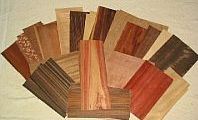
veneer samples |
|
|
|
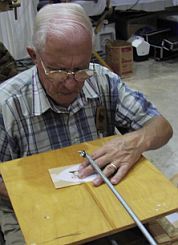
cutting the design |
The marquetry artist, or marquetarian, selects their veneers based on the
right combination of grain, color, and texture needed to create the impression
they want to achieve. Next,a pattern is chosen and the individual veneer pieces
that will make up the design or picture are cut out using either a knife or a
fret saw. Following this, the pieces are glued together and the completed design
is mounted onto a rigid base and sanded flat. |
|
|
|
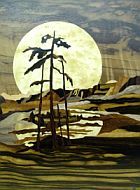
Lastly, a finish is applied to
protect the wood and the marquetry piece is completed. The infinite variety of veneers, grain, and figuration insures a unique one-of-a-kind product every time. |
 |
|
|